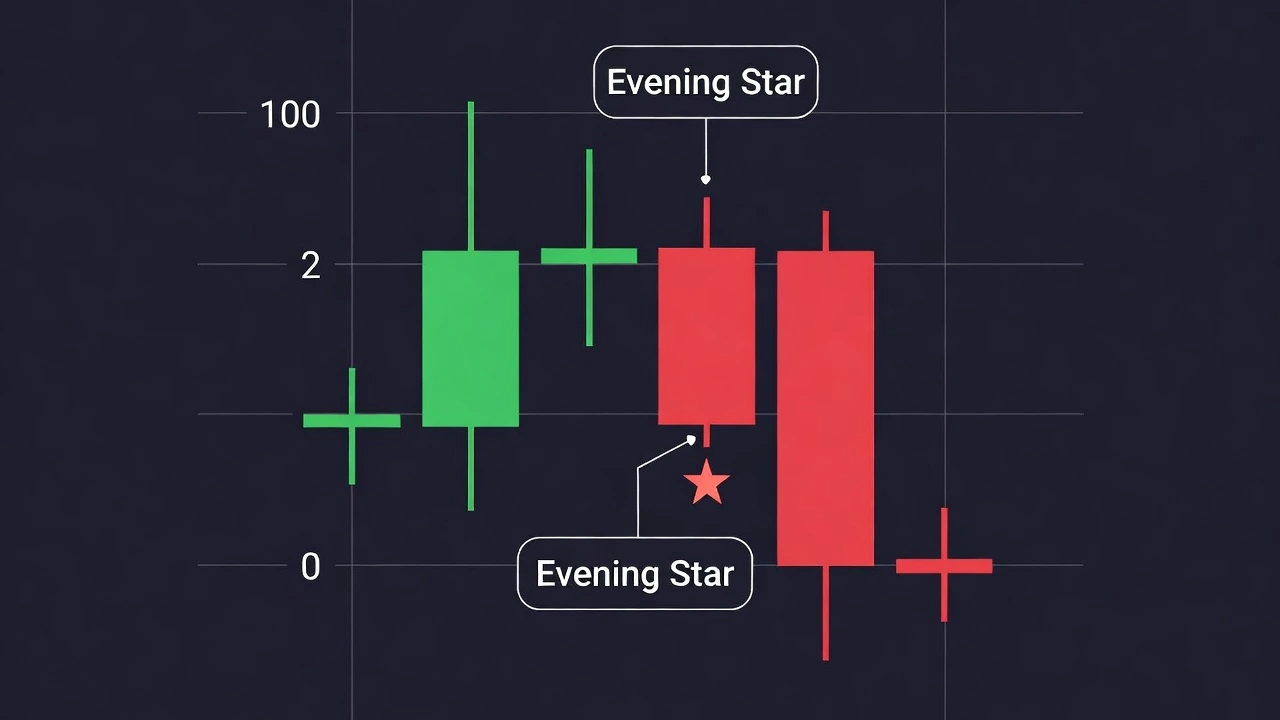

The Evening Star stands as one of the most reliable bearish reversal signals in technical analysis. Traders watch for this formation at the end of an uptrend because it often marks the point where bullish momentum fades and sellers begin to take control. Understanding its structure helps investors make timely decisions before a significant price decline.
What Is the Evening Star Candlestick Pattern?
The Evening Star is a three-candle formation that appears on candlestick charts and signals a potential shift from bullish to bearish sentiment. It earned its name because it resembles the planet Venus appearing in the evening sky just before darkness falls. This pattern typically forms after a sustained upward move and warns that the current rally may be losing steam.
Unlike single-candle patterns, the Evening Star combines three distinct candles to show a gradual change in market psychology. Each candle plays a specific role in building the reversal story, making the signal stronger than many other candlestick setups.
The Three Candles That Form the Evening Star
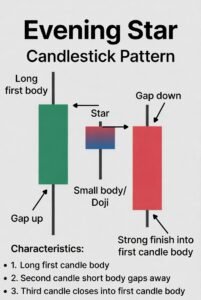
The first candle is a long bullish (green or white) candle with a substantial body. It reflects strong buying pressure and continues the existing uptrend with confidence. This candle usually closes near its high, showing that bulls remain firmly in charge at this stage.
The second candle is small and often resembles a doji or spinning top. It gaps higher from the first candle’s close but ends with little net movement. This small body indicates hesitation and indecision among traders. The gap creates a visual separation that highlights the weakening of upward momentum.
The third candle is a long bearish (red or black) candle that closes well into the body of the first candle. It typically opens near the high of the second candle and drives prices lower, erasing a significant portion of the earlier gains. This strong downward move confirms that sellers have seized control.
Why the Evening Star Is Considered a Strong Reversal Signal
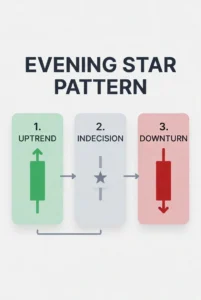
The power of the Evening Star lies in the clear shift it demonstrates between the three candles. The first candle shows optimism, the second reveals doubt, and the third delivers aggressive selling. When this pattern appears at resistance levels or after extended rallies, its reliability increases.
Volume often provides additional confirmation. Rising volume on the third candle suggests genuine seller participation rather than a temporary pullback. Traders also look for the third candle to close below the midpoint of the first candle for a more convincing signal.
How Traders Use the Evening Star in Practice
Many traders wait for the pattern to fully complete before acting. Once the third candle closes, they may enter short positions or exit long holdings. Stop-loss orders are commonly placed above the high of the second candle to protect against false signals.
Combining the Evening Star with other technical tools strengthens its effectiveness. Support and resistance levels, moving averages, or RSI divergence can filter out weaker setups. In strong trending markets, this pattern often precedes sharp corrections or trend reversals.
The Evening Star also works across different timeframes. Day traders monitor it on hourly charts, while swing traders prefer daily or weekly charts for bigger moves. Regardless of timeframe, the psychological story remains the same: bulls are exhausted and bears are stepping in.
Key Factors That Improve the Pattern’s Reliability
Several conditions make the Evening Star more dependable. A larger gap between the first and second candle increases the signal strength. The smaller the second candle’s body, the clearer the indecision becomes. Additionally, when the third candle closes deep into the first candle’s territory, the reversal potential grows.
Location matters significantly. The pattern carries more weight when it forms near major resistance zones or after a parabolic rise. In contrast, patterns appearing in the middle of a strong trend may simply represent temporary pauses rather than true reversals.
Common Mistakes to Avoid with the Evening Star
Some traders act too early after seeing only the first two candles. Waiting for the third candle to close is essential because the pattern remains incomplete until then. Others ignore overall market context and treat every Evening Star as equally powerful, which can lead to poor results.
False signals can occur in ranging markets or during low-volume periods. Always check broader market conditions and supporting indicators before committing capital based solely on this formation.
The Evening Star Candlestick Pattern remains a valuable tool for spotting potential trend changes. By recognizing its three-candle structure and understanding the market psychology behind it, traders can better anticipate shifts from bullish to bearish conditions and adjust their strategies accordingly.